
Backwater Valve vs Backflow Preventer
The names sound almost identical. Backwater valve. Backflow preventer. Both stop water from flowing the wrong way. Both protect your home. Both are required in certain situations under the Ontario Building Code. But they protect against completely different problems and they install in completely different places.
A backwater valve stops sewage from backing up into your home through the drain system. A backflow preventer stops contaminated water from flowing back into your clean drinking water supply. Here is the full breakdown and how to know which one you need.
The Quick Comparison
| Backwater valve | Backflow preventer | |
|---|---|---|
| Protects against | Sewer backup into the home | Contaminated water entering the supply |
| Where it installs | On the main sewer drain line | On the water supply line |
| Typical location | Basement floor or outside | At irrigation, boiler, fire systems |
| Direction it controls | Wastewater out only | Clean water in only |
| Typical residential cost | $2,800 to $4,800 | $300 to $1,500 per device |
| Required when | Flood-prone area, code upgrade | Irrigation, pools, boilers, commercial |
What a Backwater Valve Does
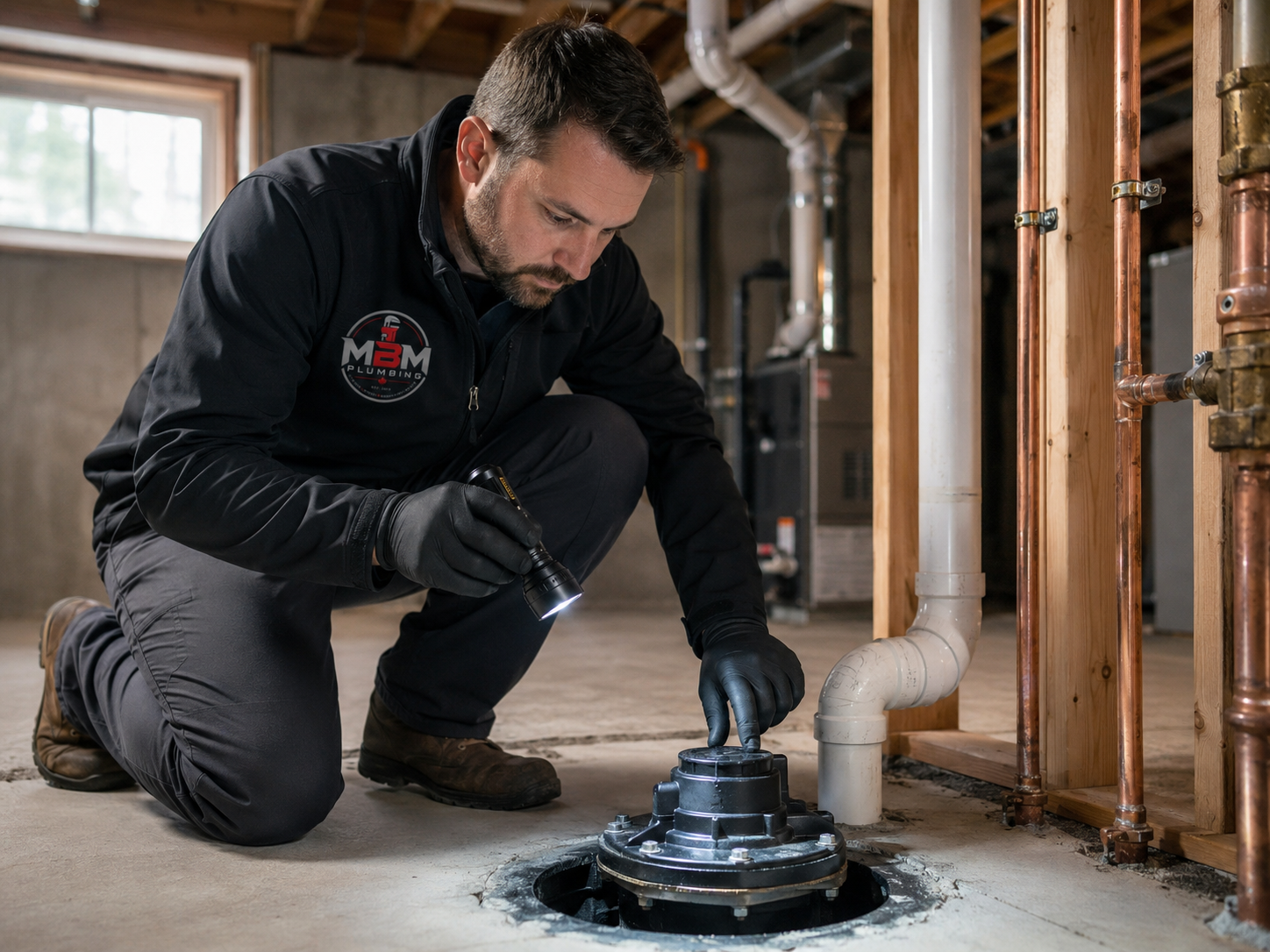
A backwater valve is installed on the main sewer line where wastewater leaves your home and joins the municipal sewer. Inside the valve is a flap that swings open when water flows out, and slams shut when water tries to flow back in.
It exists because during heavy rainfall, the municipal sewer can fill up and overflow. The "path of least resistance" is back up the sewer lateral and out the lowest drain in your home, which is usually the basement floor drain. Without a backwater valve, that means raw sewage in the basement. With one, the flap closes and the backup stays in the street.
When You Need a Backwater Valve
- Your home has flooded before, even once.
- You are in a flood-prone area of Markham (or any GTA municipality).
- You are finishing your basement (always install before).
- You want sewer backup insurance coverage (some insurers require it).
- You are taking advantage of Markham's Private Plumbing Protection Rebate.
The Ontario Building Code requires backwater valves on new construction in many cases. We handle existing-home retrofits as part of our backwater valve installation service.
What a Backflow Preventer Does
A backflow preventer is installed on the water supply side, where clean potable water enters a fixture or system. Its job is to stop contaminated water from flowing back into the clean supply.
Why does that happen? Pressure drops in the supply line (from a water main break, hydrant use, or major demand) can create a siphon effect, sucking water from your irrigation system, pool, boiler, or industrial equipment back into the drinking water supply. Without a backflow preventer, fertilizer, chlorine, or chemicals from those systems can end up in the city water.
When You Need a Backflow Preventer
- You have a lawn irrigation system.
- You have a pool or hot tub with auto-fill.
- You have a boiler or hydronic heating system.
- You operate a commercial property (restaurants, hair salons, dental offices, auto shops).
- You have a fire suppression system.
For Markham commercial buildings, annual backflow preventer testing is required by the municipality. Residential systems with irrigation also need annual testing in most cases.
How They Differ in Practice
Direction of Protection
A backwater valve protects against water trying to come IN through the drain. A backflow preventer protects against water trying to come BACK from your fixtures INTO the supply. One faces the sewer, the other faces the city water.
What They Protect
A backwater valve protects your home from contamination. A backflow preventer protects the public water supply from contamination. Different beneficiaries, both important.
Where They Sit
A backwater valve installs in the basement floor (or sometimes outside in a chamber), on the main sewer line out of the home. A backflow preventer installs at the point of risk: on the irrigation supply line, the boiler feed line, the fire system riser. They are never in the same place.
Maintenance
A backwater valve needs an annual check to confirm the flap moves freely and debris has not built up. A backflow preventer needs annual testing by a certified tester, with paperwork filed with the municipality.
Both, or Either?
Most Markham homes need a backwater valve. Many of them also need a backflow preventer because of irrigation, pools, or boilers. They are not alternatives to each other; they address different threats. Confirm with a licensed plumber based on your specific home.
For combined flood protection in Markham, the most common pairing is a backwater valve plus a sump pump plus weeping tile disconnection. Markham's rebate covers all three. Backflow preventers are a separate concern, driven by what is connected to your water supply.
Code Requirements in Ontario
The Ontario Building Code requires backwater valves on new residential construction in many municipalities. Older homes (pre-2008 in many areas) often do not have one, which is exactly why retrofits are common.
Backflow preventer requirements are set by the local municipality. Markham requires them on any cross-connection between potable water and a non-potable source. Commercial properties have stricter rules and mandatory annual testing.
Backwater Valve vs Backflow Preventer FAQ
What is the main difference between a backwater valve and a backflow preventer?
A backwater valve stops sewer backup from entering the home through the drain. A backflow preventer stops contaminated water from entering the clean water supply. Different problem, different location.
Do I need both?
Many homes do. Backwater valves are about basement flood protection. Backflow preventers are about water quality protection. If you have irrigation, a pool, or a boiler, you likely need both.
How much does a backwater valve cost in Markham?
$2,800 to $4,800 for installation in a typical home. The Markham Private Plumbing Protection Rebate covers up to $5,000 of eligible flood protection work.
How much does a backflow preventer cost?
$300 to $1,500 per device installed for residential applications. Commercial systems with multiple devices and annual testing run higher.
Does the City of Markham require backflow testing?
Yes for commercial buildings and many residential systems with irrigation. Annual testing by a certified tester is required, with results filed with Markham Waterworks.
The Bottom Line
Backwater valve = stops sewage from coming back into your home. Backflow preventer = stops contaminated water from getting into the supply. Different problems, different locations, often both are needed. Confirm with a licensed plumber what your specific home requires.
Need backwater valve installation or backflow protection?
MBM Plumbing handles backwater valve installation across Markham and manages the Private Plumbing Protection Rebate paperwork. Call (647) 293-2021 or request a free quote.